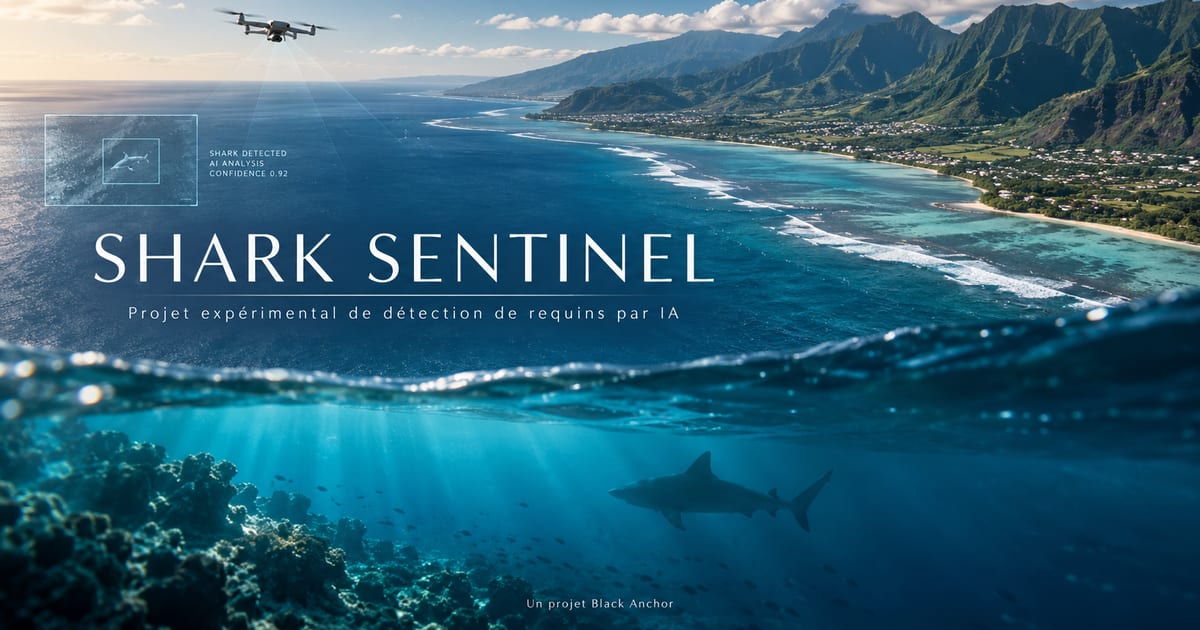
What if artificial intelligence could help us better spot sharks in the water?
This question has been on my mind for years. Today, I’ve decided to start answering it, at my own scale, with Shark Sentinel.
An idea born on Reunion Island
Having grown up on Reunion Island and being a surfer, paddleboarder and snorkeler, I’ve seen how deeply the shark crisis has changed our relationship with the ocean. The desire to enjoy the water is still there, but apprehension has sometimes crept into moments that should feel like pure freedom.
On a recent trip back home, I was glad to see the safety measures now in place at surf spots. It also rekindled an old idea: exploring what my skills as a developer could bring to this problem.
With artificial intelligence tools becoming more accessible, I finally started experimenting.
Teaching a model to spot a shark
Shark Sentinel is an experimental project for detecting sharks in images and videos using computer vision.
For now, most of the work happens behind the scenes: gathering images, annotating sharks, training a model, then looking at what it detects… and what it misses. Behind every box drawn around an animal, there are trials, adjustments and a lot to learn.
The first version is built on YOLO, an object detection model. The goal at this stage is to understand its capabilities and limits on a wide variety of images before considering next steps.
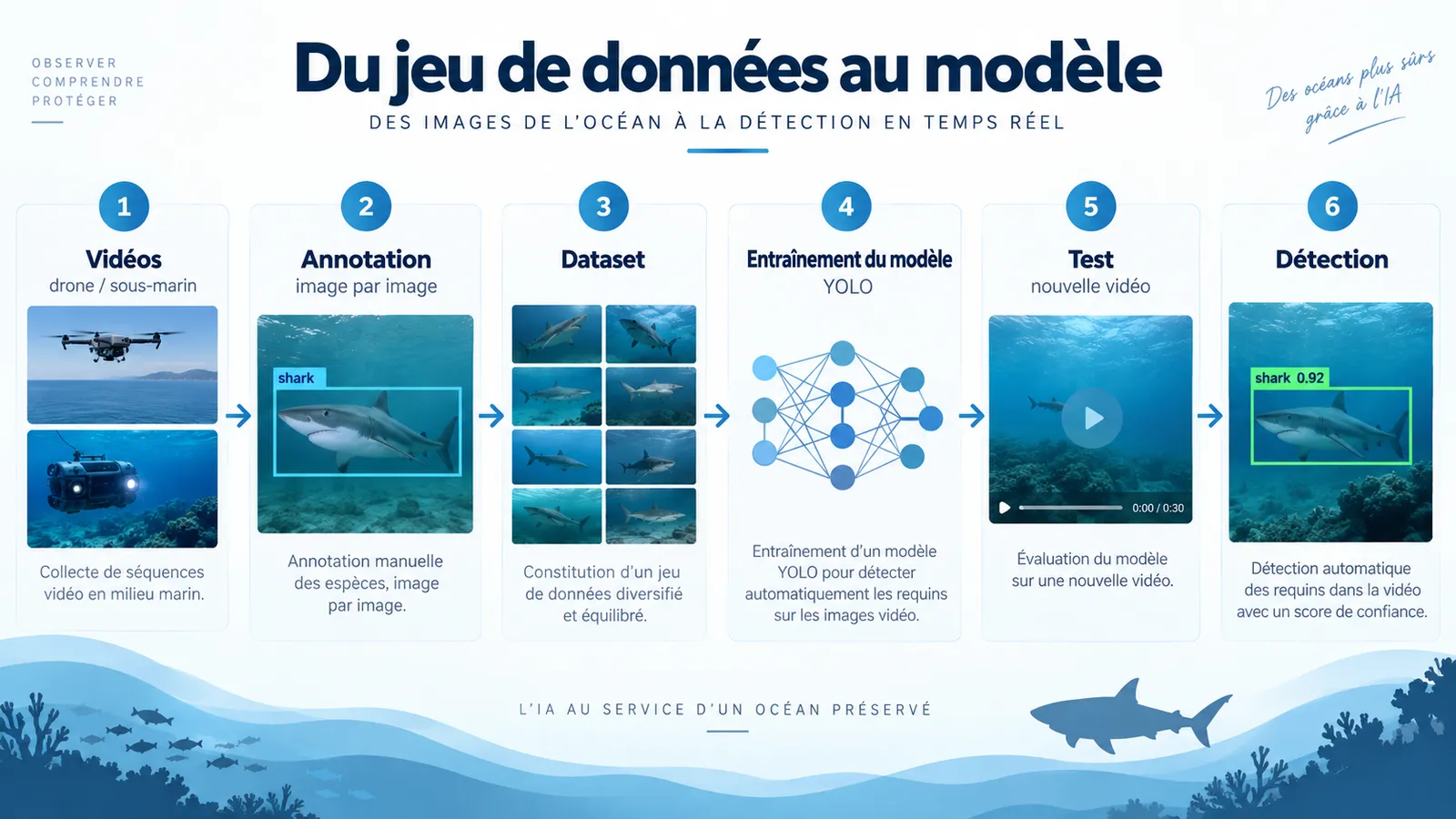
From dataset to detection tests: an illustration of the work behind the model. The equipment shown represents possible image sources; it does not depict a system that is already deployed.
A first look at early tests
These screenshots give a first glimpse of the detections produced by the prototype, on aerial and underwater views.
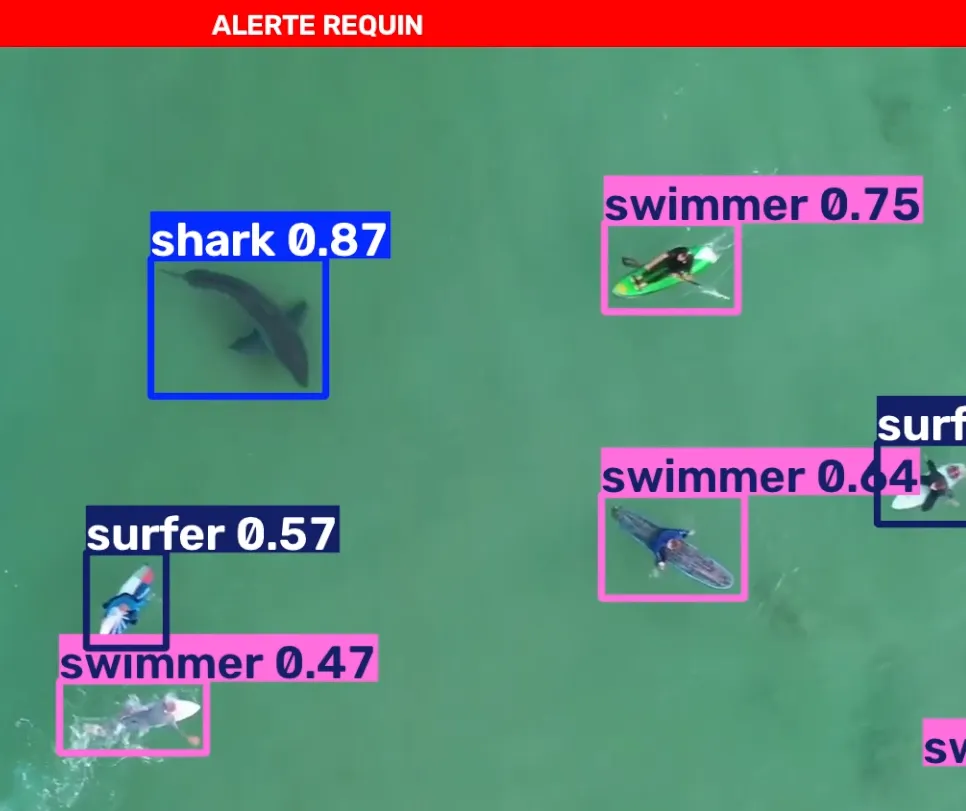
Experimental prototype — a shark is flagged in a scene where several water users are visible. The displayed labels still need checking, especially to correctly identify people on their boards.
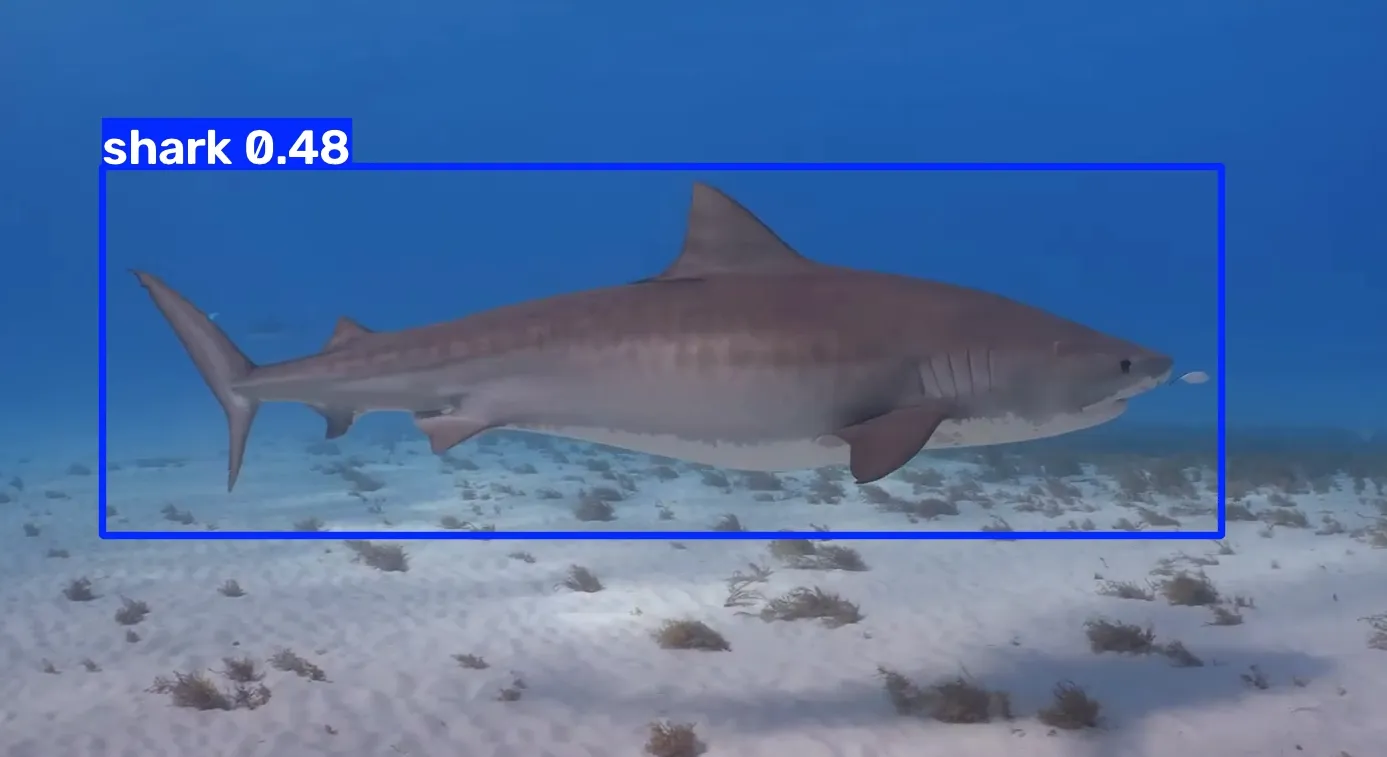
Experimental prototype — a first underwater example, with a confidence score of 0.48 displayed by the model.
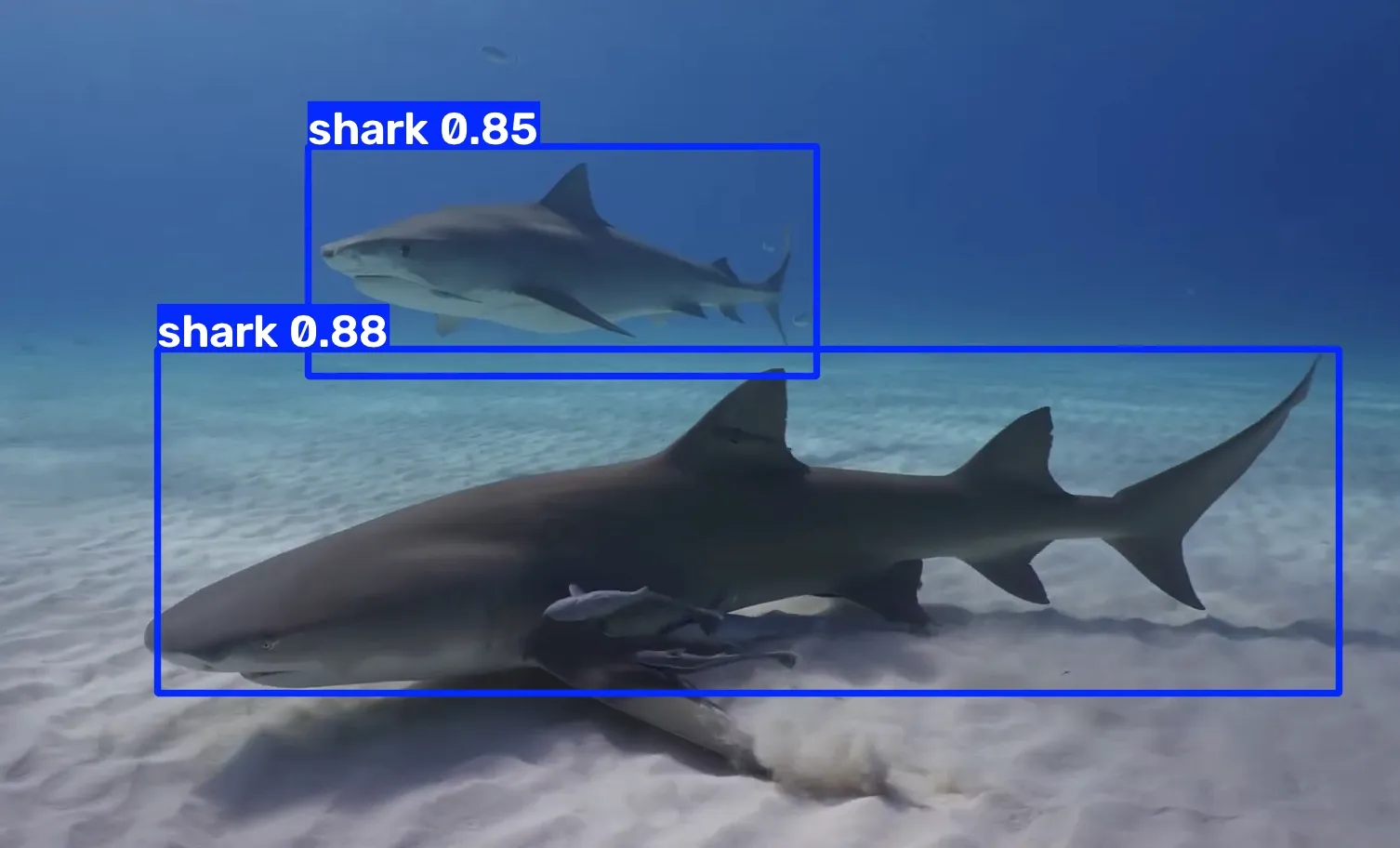
Experimental prototype — two sharks spotted in the same image, with displayed scores of 0.85 and 0.88.
Seeing these boxes appear is motivating. But a handful of images isn’t enough to assess the model’s reliability: the displayed scores apply to each individual detection, not to the overall accuracy of the system. The next phase of work also involves examining errors and missed sharks.
A beginning worth sharing
Shark Sentinel is taking its very first steps. This V0 is not a safety system and does not replace existing monitoring. It’s the start of an experimental journey that I want to share as it progresses, in an open source spirit.
What drives me: exploring an approach that could, in time, contribute to better coexistence between human activities and marine life, with respect for the animal.
I’ll share the first results, the challenges I run into and the next concrete milestones here, in the Lab.
Shark Sentinel is out of the drawer. The experiment begins.